Curriculum Design and Development for 21st Century Educators

- Description
- Curriculum
- Reviews
- Grade
Course Structure:
This is a comprehensive, self-paced online course structured across three progressive levels:
-
Level 1: Beginner – Foundations of Curriculum Design
-
Level 2: Intermediate – Designing and Implementing Curriculum
-
Level 3: Advanced – Curriculum Leadership and Innovation
Each level is strategically designed to build core knowledge, practical skills, and advanced leadership competencies needed to design and implement future-ready curriculum frameworks.
Target Audience:
Primary and Secondary School Educators, Curriculum Leaders, and Instructional Designers.
Learning Outcomes
By the end of this three-level course, participants will be able to:
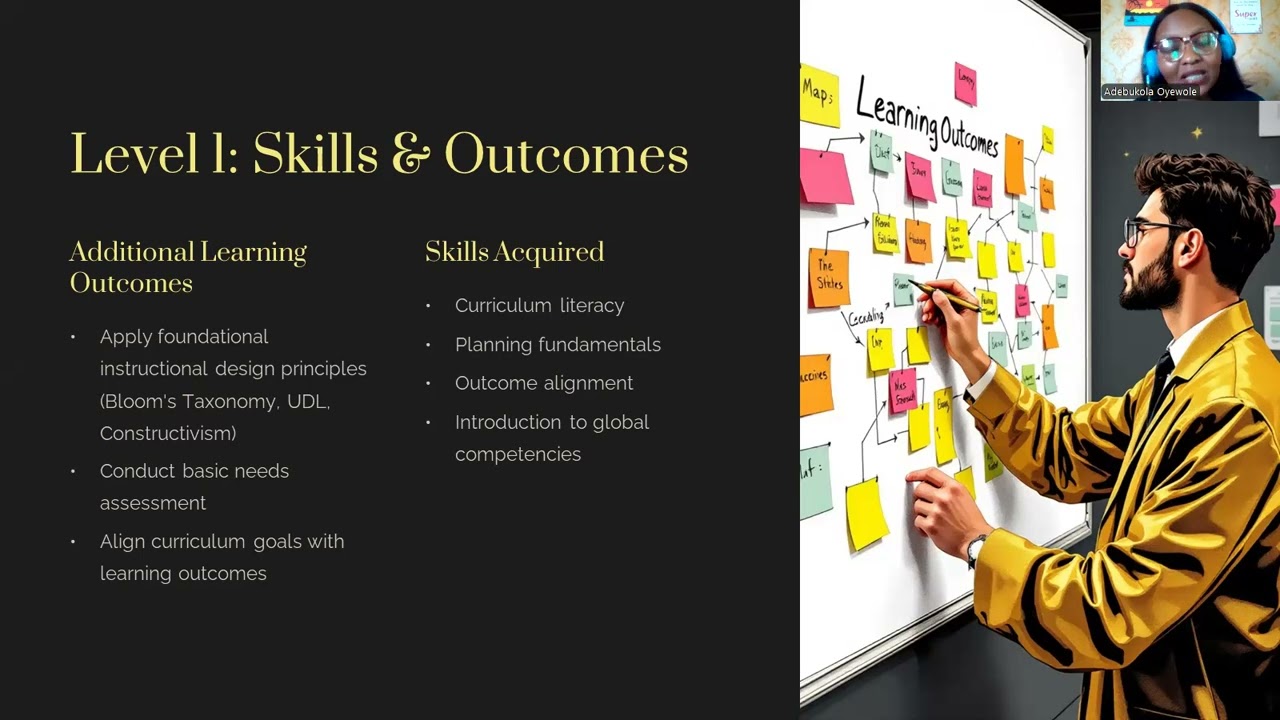
Level 1: Beginner – Foundations of Curriculum Design
-
Define key curriculum terms and differentiate among various curriculum types.
-
Identify and explain major curriculum models including subject-, learner-, and problem-centered approaches.
-
Understand and describe the 6 Cs of Global Competencies and their relevance to 21st-century learning.
-
Apply foundational instructional design principles (e.g., Bloom’s Taxonomy, UDL, Constructivism).
-
Conduct a basic needs assessment and align curriculum goals with learning outcomes.
Skills Acquired:
Curriculum literacy, planning fundamentals, outcome alignment, introduction to global competencies.
Level 2: Intermediate – Designing and Implementing Curriculum
-
Integrate the 6 Cs into curriculum units using practical classroom strategies.
-
Design and apply interdisciplinary and project-based learning experiences.
-
Incorporate educational technology effectively, promoting digital literacy and citizenship.
-
Design inclusive curricula that meet diverse learner needs, including those with learning differences or special needs.
Skills Acquired:
Competency-based design, digital integration, inclusive strategies, interdisciplinary planning, project-based learning.
Level 3: Advanced – Curriculum Leadership and Innovation
-
Evaluate curriculum effectiveness using data, tools, and stakeholder feedback.
-
Lead curriculum innovation and reform initiatives within institutions.
-
Align curriculum practices with global trends, ethical considerations, and education policy.
-
Design learning experiences that foster entrepreneurship, adaptability, and lifelong learning in students.
Skills Acquired:
Leadership in curriculum reform, policy alignment, strategic planning, innovation in education, future-focused curriculum development.
At the End of the Full Course, Learners Will Be Able To:
-
Confidently design, implement, and lead curriculum initiatives that are inclusive, digital-ready, and globally relevant.
-
Build learning environments that equip students with critical 21st-century competencies.
-
Position themselves as curriculum innovators and change agents in their institutions and communities.
Certification:
Participants receive a Certificate of Completion at the end of each level.